Top Header Menu

Tag Archives | Amygdala

Confronting the Negativity Bias

Confronting The Negativity Bias

My previous post used the example of Stephen Colbert’s satirical “March to Keep Fear Alive” as a timely illustration of a larger point: humans evolved to be fearful – since that helped keep our ancestors alive – so we are very vulnerable to being frightened and even intimidated by threats, both real ones and “paper […]

Continue Reading 0
Image of the brain

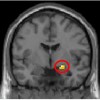
Brain Imaging Shows That A Sense Of Justice Is Built Into The Brain

A new study from Karolinska Institutet in Sweden shows that the brain has built-in mechanisms that trigger an automatic reaction to someone who refuses to share. The reaction derives from the amygdala, an older part of the brain. The subjects’ sense of justice was challenged in a two-player money-based fairness game, while their brain activity […]

Continue Reading 0
threat learning task

Teen-Aged Brains Are Less Discerning Of Threat And More Vulnerable To Stress

Teen brains rely on early-maturing brain structures that process fear differently than adult brains according to an NIMH-funded study. As a result, teens may have more difficulty than adults in differentiating between danger and safety, leading to more pervasive stress and anxiety. The study was published in the Proceedings of the National Academy of Sciences.

Continue Reading 0
Neurochemical Cascade

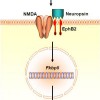
Neuroscientists Discover New ‘Chemical Pathway’ In The Brain For Stress

A team of neuroscientists at the University of Leicester, UK, in collaboration with researchers from Poland and Japan, has announced a breakthrough in the understanding of the ‘brain chemistry’ that triggers our response to highly stressful and traumatic events. The discovery of a critical and previously unknown pathway in the brain that is linked to […]

Continue Reading 0
mouse under optogenetic control

Researchers Activate Brain Pathways With Light To Dissect How Anxiety Works

Scientists, for the first time, have switched anxiety on-and-off in active animals by shining light at a brain pathway. Instinctively reclusive mice suddenly began exploring normally forbidding open spaces when a blue laser activated the pathway – and retreated into a protected area when it dimmed. By contrast, anxiety-like behaviors increased when an amber laser […]

Continue Reading 0
cingulate gyrus

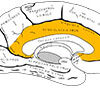
Neural Activity Similar To Substance Dependence Linked to Food Addiction In Brain Imaging Study

Persons with an addictive-like eating behavior appear to have greater neural activity in certain regions of the brain similar to substance dependence, including elevated activation in reward circuitry in response to food cues, according to a report posted online today that will appear in the August print issue of Archives of General Psychiatry, one of the […]

Continue Reading 0

Proudly hosted by Lightning Base